
Choosing the best perennial flowers for a commercial landscape is a brilliant way to create outdoor spaces that look attractive, feel welcoming and continue to perform year after year. For businesses, schools, retail sites, offices and other commercial premises, the right planting can make a big difference to first impressions without creating too much ongoing maintenance.
Perennial flowers are especially useful because they return each year, unlike annual plants that need replacing after one season. This makes them a practical and sustainable choice for commercial landscaping, helping to reduce waste while keeping outdoor areas full of colour and life.
They are also a great option for businesses that want to support biodiversity. Many flowering perennials attract bees, butterflies and other pollinators, especially when planted alongside wildflower gardens and other eco-friendly features. With careful planning, your commercial grounds can look beautiful while also benefiting the local environment.
Our Guide To The Best Perennial Flowers
The best perennial flowers for commercial landscaping are not just the ones that look pretty. They also need to be reliable, easy to maintain, and suitable for the space where they are planted.
Commercial landscapes often have to cope with high footfall, changing weather, limited watering, and the need to stay presentable year-round. This is why perennial flowers are such a popular choice. Once established, they can offer long-term colour, structure and wildlife value without needing to be replanted every season.
In this article, we will cover:
- What are perennial plants and flowers?
- Low-maintenance flowering perennials
- Choosing perennials for commercial landscapes
- How to care for perennial flowers
What Are Perennial Plants And Flowers?
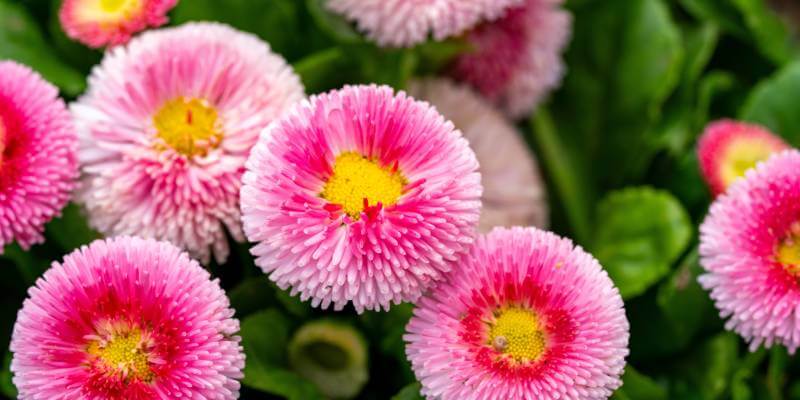
Perennial plants and flowers are plants that live for more than two years. Unlike annuals, which complete their full life cycle in one growing season, perennials grow back year after year from the same root system.
During colder months, many perennials die back above ground. However, the roots remain alive beneath the soil, ready to produce fresh growth when the growing season returns. This makes them a long-term planting choice for commercial outdoor spaces.
For commercial landscaping, perennials can be used in many areas, including:
- Entrance borders
- Pathways and walkways
- Courtyards
- Car park edges
- School grounds
- Office landscapes
- Retail parks
- Wildlife-friendly areas
They can help soften the appearance of buildings, add colour to outdoor spaces and create a more welcoming environment for staff, visitors, pupils or customers.
Perennials also support a more sustainable approach to landscaping. Because they come back each year, there is less need for constant replanting, which can reduce plant waste and maintenance time. A wide variety is also excellent for pollinators, making it a great choice for commercial sites that want to boost biodiversity.
The RHS explains that perennials are usually best planted in spring or autumn when the soil is moist, although container-grown plants can often be planted at other times if the ground conditions are suitable. This gives commercial sites flexibility when planning new planting projects around quieter periods, school holidays or scheduled maintenance work.
Low Maintenance Flowering Perennials
Low-maintenance planting is often a priority for commercial spaces. Outdoor areas need to look tidy and cared for, but most businesses do not want plants that need constant attention.
The good news is that many perennial flowers are both beautiful and practical. Here are some of the best options for commercial landscaping.
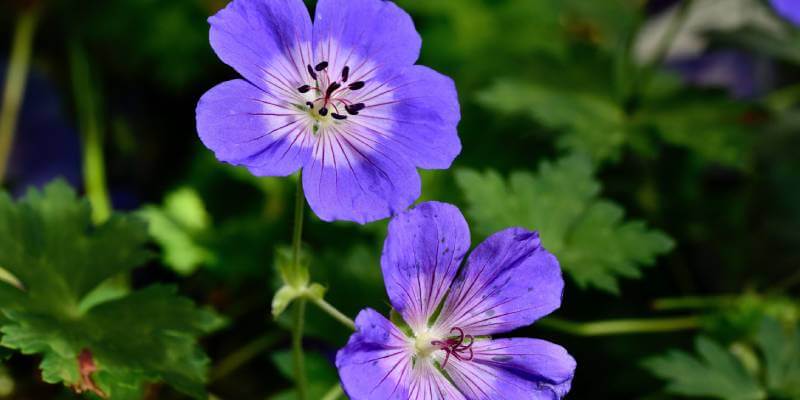
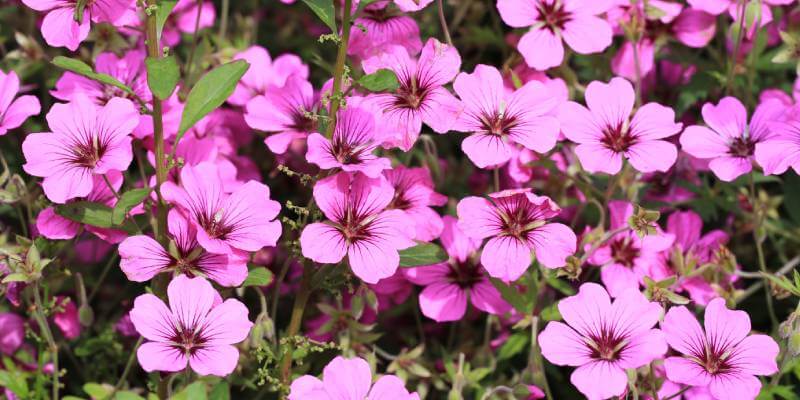
Geranium ‘Rozanne’
Geranium ‘Rozanne’ is one of the most popular hardy geraniums and is well known for its long flowering season. It produces soft violet-blue flowers from late spring or early summer through to autumn, making it ideal for adding reliable colour to borders.
It is a great choice for commercial sites because it:
- Flowers for a long period
- Covers bare soil well
- Needs very little deadheading
- Works well along paths and border edges
- Creates a soft, natural look
This plant is particularly useful in relaxed planting schemes where you want colour without a formal or fussy appearance.
Nepeta
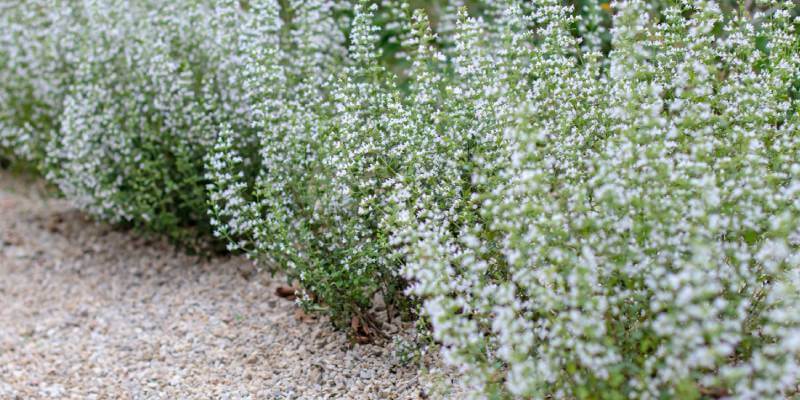
Nepeta, also known as catmint, is a lovely low-maintenance perennial with aromatic leaves and clouds of purple-blue flowers. It works especially well in sunny commercial areas and is a favourite with pollinators.
Nepeta is a good option because it:
- Handles dry conditions once established
- Attracts bees and other pollinators
- Has a soft, natural appearance
- Looks great when planted in groups
- Can be cut back after flowering to encourage fresh growth
It is ideal for car park borders, office landscapes, sunny entrances and wildlife-friendly planting schemes.
Rudbeckia
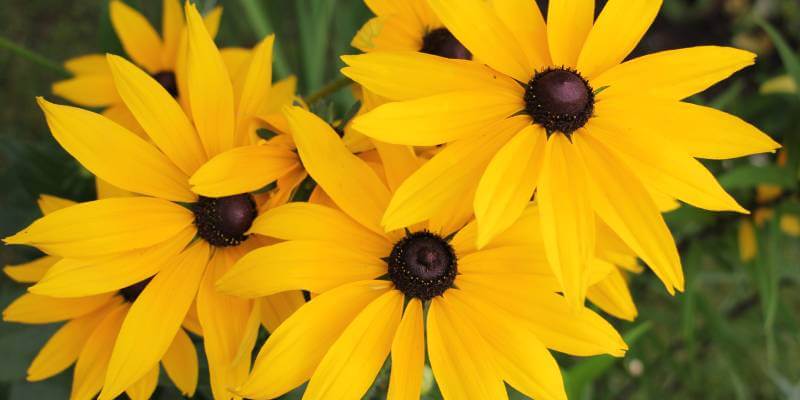
Rudbeckia, often called black-eyed Susan, is a bright and cheerful perennial that brings warm yellow tones to commercial landscapes. It flowers from midsummer into autumn, which helps keep outdoor spaces looking colourful later in the year.
This plant works well because it:
- Produces bold, eye-catching flowers
- Performs well in sunny areas
- Adds late-season colour
- Supports pollinators
- Offers seed heads for birds if left standing
Rudbeckia is a brilliant choice for larger borders, public-facing areas and planting schemes that need a strong splash of colour.
Echinacea
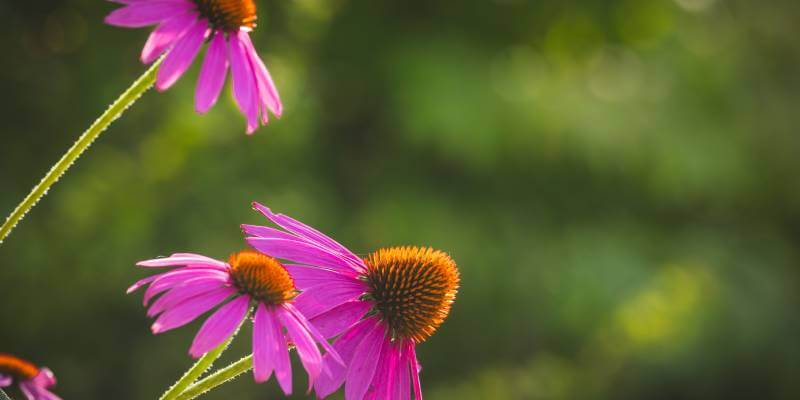
Echinacea, also known as coneflower, is a tough and attractive perennial with upright stems and daisy-like flowers. It is often seen in pink, purple and white shades, although other colours are available too.
It is a great commercial landscaping plant because it:
- Has strong stems
- Attracts bees and butterflies
- Handles dry conditions once established
- Adds height and structure
- Provides seed heads for birds in winter
The Wildlife Trusts recommend planting pollinator-friendly flowers to support bees, butterflies and other insects, and Echinacea is a great example of a plant that can help increase biodiversity in commercial grounds.
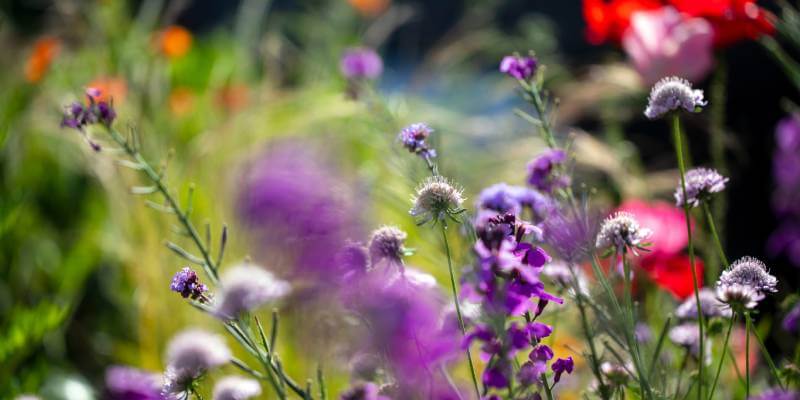
Erysimum ‘Bowles’s Mauve’
Erysimum ‘Bowles’s Mauve’ is a pretty wallflower with soft purple blooms. It can flower for many months in the right conditions, making it a great choice for adding long-lasting colour.
It is best suited to sunny, well-drained areas and works well in:
- Entrance planting
- Raised beds
- Courtyards
- Mixed borders
- Pollinator-friendly schemes
Although it may need occasional trimming to keep it neat, it rewards you with a long flowering season and a gentle, colourful display.
Lavender
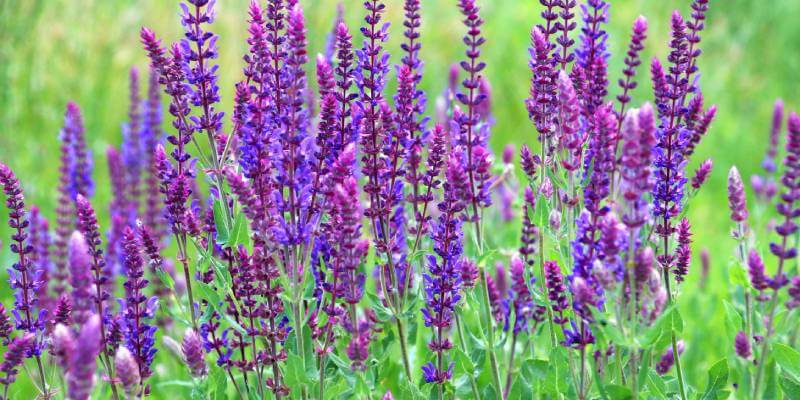
Lavender is a classic choice for commercial landscaping. It is loved for its purple flowers, silvery foliage and calming scent.
It is especially useful for:
- Entrances
- Seating areas
- Pathways
- Courtyards
- Sensory gardens
Lavender thrives in sunny, well-drained spaces and is drought-tolerant once established. It also attracts pollinators, making it a strong option for businesses that want a more sustainable planting scheme.
Salvia
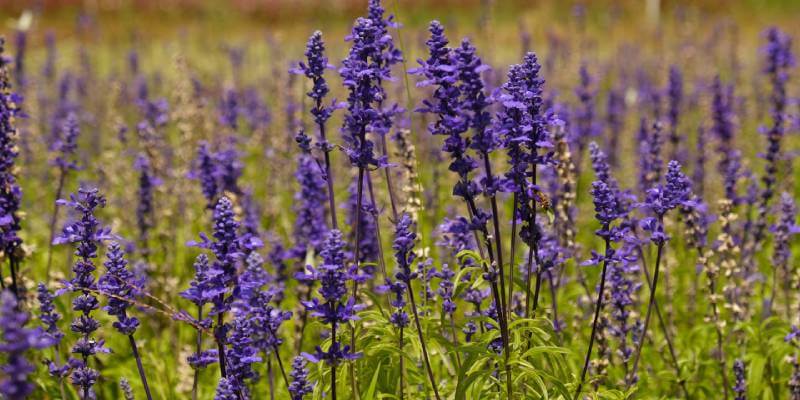
Salvia is another excellent perennial for adding colour and height. Its upright flower spikes come in shades of purple, blue, pink and white, depending on the variety.
Salvia is useful because it:
- Flowers for a long period
- Attracts pollinators
- Works well with grasses and other perennials
- Adds height without taking up too much space
- Can produce more flowers after being cut back
It is a lovely choice for modern commercial borders and biodiversity-focused planting.
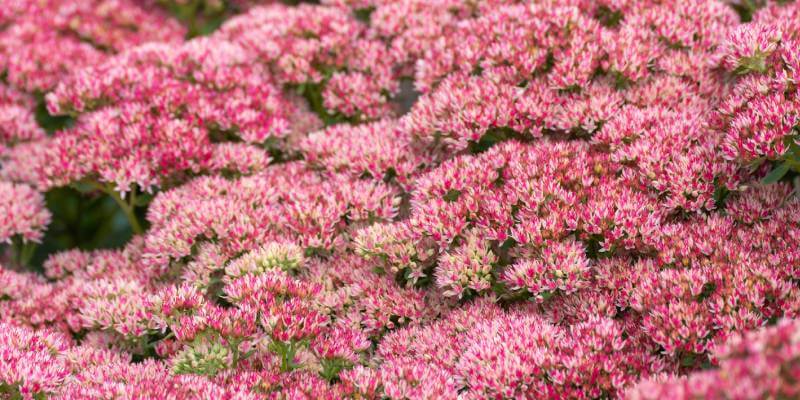
Sedum
Sedum is a tough perennial that performs well in dry, sunny areas. It has fleshy leaves and clusters of small flowers that are popular with pollinators, especially later in the season.
This plant is useful for commercial sites because it:
- Needs very little maintenance
- Tolerates dry conditions
- Provides late-season nectar
- Adds structure to borders
- Looks good even after flowering
Sedum is ideal for low-maintenance beds, gravel-style planting and sunny borders where other plants may struggle.
Achillea
Achillea, also known as yarrow, has flat clusters of flowers in shades such as yellow, white, pink and orange. It has a natural meadow-style look and works well in eco-friendly landscaping.
Achillea is a good choice because it:
- Handles dry conditions
- Attracts pollinators
- Works well with grasses and wildflowers
- Adds soft colour and texture
- Needs little attention once established
It is especially useful for businesses that want their grounds to feel more natural and wildlife-friendly.
Choosing Perennials For Commercial Landscapes
When choosing perennial flowers for commercial landscaping, it is important to consider more than just colour. The plants need to suit the site and work with the level of maintenance available.
Before planting, consider:
- How much sunlight the area gets
- Whether the soil is dry, damp, heavy or free-draining
- How exposed the site is to wind
- How much footfall does the area receives
- Whether watering will be available
- How formal or natural you want the space to look
- How will the planting support biodiversity
For example, Lavender, Nepeta, Sedum and Echinacea are better suited to sunny, well-drained areas. Hardy geraniums can work well in mixed borders and some slightly shadier spaces. Rudbeckia and Salvia are great for adding colour and structure to sunny commercial beds.
It is also worth thinking about the full year, not just summer. A good planting scheme should offer interest across different seasons, with a mix of flowers, foliage, seed heads, grasses and evergreen structure.
This is where professional support can be valuable. Neal Landscapes works with commercial clients to create planting schemes that are attractive, practical and suited to the site. For businesses looking for Grounds maintenance in Milton Keynes, the right maintenance plan can help keep perennial plantings healthy and presentable year-round.
How To Care For Perennial Flowers
Perennial flowers are generally lower-maintenance than seasonal bedding, but they still need proper care to perform well. Good maintenance helps them flower better, stay healthy and come back stronger each year.
Watering
Newly planted perennials need regular watering while their roots establish. Once they are settled, many varieties can cope with less frequent watering, especially drought-tolerant plants such as Lavender, Nepeta, Sedum and Echinacea.
Deep watering is usually better than a quick surface-level splash. It encourages roots to grow deeper, helping plants become more resilient during dry weather.
Feeding
A general slow-release fertiliser in early spring can help perennials start the growing season well. However, feeding should be balanced. Too much fertiliser can lead to weak, leafy growth rather than strong flowers.
Improving soil health with compost and mulch is often a more sustainable way to support long-term plant growth.
Mulching
Mulching is one of the simplest ways to care for perennial borders. It helps:
- Hold moisture in the soil
- Reduce weeds
- Improve soil structure
- Keep borders looking tidy
- Protect roots during colder weather
For commercial landscapes, mulch also gives beds and borders a neat, finished appearance.
Deadheading
Deadheading means removing faded flowers. This can help some perennials keep blooming for longer and prevent borders from looking tired.
Plants such as Salvia, Nepeta and some hardy geraniums can often be cut back after flowering to encourage fresh growth.
However, not every plant should be cut back straight away. Seed heads from plants such as Echinacea, Rudbeckia and Sedum can be left for birds and winter interest, especially in wildlife-friendly areas.
Dividing
Some perennials become crowded after a few years. They may start flowering less or develop bare centres. Dividing them every 3 to 5 years can help refresh the plant and keep it healthy.
This is also a cost-effective way to create new plants for other areas of a commercial site.
Seasonal Cutting Back
Many perennials need cutting back either in autumn or early spring. For more wildlife-friendly landscapes, it can be helpful to leave some stems and seed heads standing through winter.
This gives insects shelter, provides birds with food and adds natural structure to the landscape. High-visibility areas can still be kept neat, while quieter areas can be managed in a softer, more nature-friendly way.
A planned approach to Landscape maintenance in Milton Keynes can help commercial sites keep their outdoor spaces looking professional while also supporting biodiversity.
If you are looking for more ways to make your commercial grounds better for wildlife, take a look at our bug hotel installation in Milton Keynes case study. It shows how small additions, from wildlife hotels to future wildflower meadows, can help create more eco-friendly outdoor spaces for commercial sites.
Create A Commercial Landscape That Flowers Year After Year
The Best Perennial Flowers for commercial landscaping are those that combine colour, reliability, low maintenance, and biodiversity value. Plants such as Geranium ‘Rozanne’, Nepeta, Rudbeckia, Echinacea, Erysimum, Lavender, Salvia, Sedum and Achillea can all help create outdoor spaces that look beautiful and continue to improve over time.
According to the The Wildlife Trusts, even small changes, such as planting nectar-rich flowers, reducing mowing, and leaving natural shelter, can help create a more wildlife-friendly outdoor space.
For businesses, perennial planting is a smart and sustainable choice. It can reduce the need for seasonal replanting, improve the appearance of commercial grounds and support local wildlife. When combined with wildflower gardens and eco-friendly maintenance, it can help create a landscape that is both professional and better for the planet.
Neal Landscapes works with commercial clients to design, plant and maintain outdoor spaces that are practical, attractive and environmentally conscious. Whether you want to refresh tired borders, introduce more pollinator-friendly planting or create a more sustainable landscape, our team can help bring your commercial grounds to life.
According to the The Wildlife Trusts, even small changes, such as planting nectar-rich flowers, reducing mowing, and leaving natural shelter, can help create a more wildlife-friendly outdoor space.